Featured
Table of Contents
That liberates money in the short-term, and you might have 3 to 4 years to conserve toward the negotiation amount. Really unsafe to credit report, mainly as a result of missed out on repayments and an unfavorable "cleared up" mark that might remain on your credit score report for as much as 7 yearsMay be just choice if various other options (debt consolidation, balance transfer charge card, debt forgiveness) aren't possibleTypically needs a cost to the 3rd event, which could counter some or every one of the financial savings from financial obligation settlementMay aid you avoid bankruptcy if you have actually missed out on several paymentsNot all creditors collaborate with financial debt settlement companies Financial obligation mercy might be ideal for you if you are experiencing a monetary challenge that makes it nearly difficult to pay down your financial obligation equilibriums.

With a DMP, you make one regular monthly payment to the debt therapy company. Those funds are then distributed to lenders of your unprotected debts, such as charge card and installment loans. The company deals with your creditors to reduce passion prices or waive charges, yet some creditors might reject such concessions.
It can assist you pay down debt if you're able to protect a financing price that's lower than the typical price of the accounts you're combining. You must abstain from racking up financial debt on those freshly cleared accounts or your debt might grow also higher.
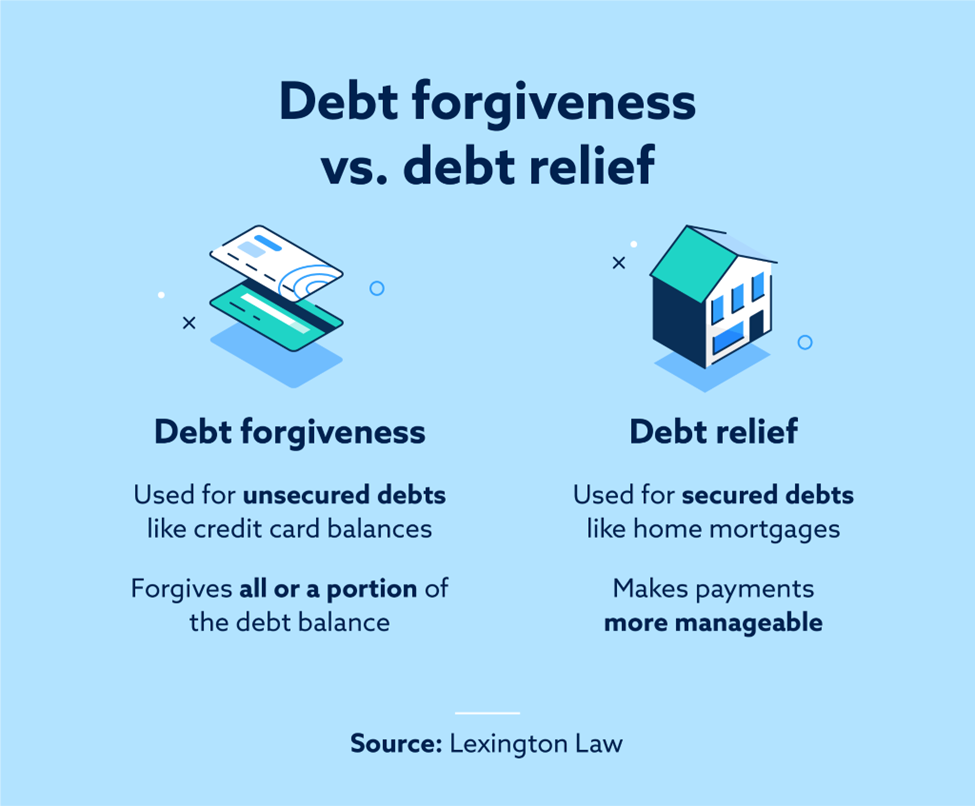
That offers you lots of time to remove or significantly lower your equilibrium while making interest-free settlements.
Getting My Understanding Your Protections Regarding Bankruptcy Proceedings To Work
You may require it if your financial institution or a collection company ever before attempts to accumulate on the financial obligation in the future. When a lender forgives $600 or more, they are required to send you Type 1099-C.
Financial obligation mercy or settlement often injures your credit report. Anytime you settle a financial obligation for less than you owe, it may show up as "cleared up" on your credit scores report and influence your credit rating for 7 years from the day of negotiation. Your credit can additionally drop considerably in the months resulting in the forgiveness if you fall back on repayments.
Not known Facts About Building a Personalized Financial counseling for veterans in Washington state who struggle with high housing costs Roadmap
Tax financial obligation concession programs Tax obligation debt happens when the amount of taxes you owe exceeds what you have actually paid. This circumstance often results from underreporting income, not filing returns in a timely manner, or discrepancies found throughout an internal revenue service audit. The effects of building up tax financial obligation are major and can include tax obligation liens, which provide the IRS a legal insurance claim to your residential or commercial property as safety and security for the debt.
Higher rate of interest on available debt. Incomes and Financial institution Accounts internal revenue service can levy (take) salaries and financial institution accounts to please the financial obligation. Reduced income and disturbance of necessary economic processes. Residential or commercial property Seizure In severe instances, the IRS can seize and sell residential property to cover the financial debt. Loss of important assets and potential displacement.
Depression, stress and anxiety, and various other psychological health issues. Social Preconception Facing lawsuit from the internal revenue service can bring social preconception. Damages to online reputation and partnerships. Work Opportunities A bad credit report as a result of exhaust debt can restrict employment possibility. Problem searching for or maintaining a work. Federal government Benefits Tax debt might influence eligibility for federal government advantages, such as Social Safety And Security and Medicaid.
Not known Details About Actual Experiences from Debt Relief Clients
The OIC takes into consideration a number of aspects, consisting of the taxpayer's income, costs, possession equity, and capability to pay. Successfully discussing an OIC can be complicated, requiring a thorough understanding of the internal revenue service's standards and a solid disagreement for why your deal straightens with your capacity to pay. It's important to note that not all applications are accepted, and the procedure needs detailed financial disclosure.
The internal revenue service evaluates your overall economic situation, including your income, expenditures, property equity, and capability to pay. You should additionally be present with all filing and settlement demands and not remain in an open insolvency proceeding. The internal revenue service additionally considers your compliance history, examining whether you have a record of timely declaring and paying taxes in previous years.
A Biased View of Building a Sustainable Spending Strategy for Permanent Success
The application procedure for an Offer in Compromise entails a number of detailed steps. Initially, you have to finish and send internal revenue service Type 656, the Offer in Compromise application, and Form 433-A (OIC), a collection information declaration for individuals. These types require comprehensive monetary info, consisting of details regarding your income, financial obligations, expenses, and properties.
Back tax obligations, which are unsettled tax obligations from previous years, can dramatically increase your total IRS financial obligation if not resolved promptly. This debt can accumulate rate of interest and late repayment fines, making the original amount owed much bigger over time. Failure to pay back tax obligations can cause the IRS taking enforcement activities, such as releasing a tax lien or levy versus your residential or commercial property.
It is necessary to address back taxes immediately, either by paying the sum total owed or by preparing a layaway plan with the internal revenue service. By taking proactive steps, you can stay clear of the accumulation of additional passion and charges, and avoid much more hostile collection activities by the internal revenue service.
One common reason is the belief that the taxpayer can pay the total either as a round figure or through a payment plan. The IRS additionally thinks about the taxpayer's revenue, expenditures, property equity, and future earning potential. If these factors indicate that the taxpayer can afford to pay more than the used amount, the IRS is most likely to reject the offer.
The Only Guide to Things to Avoid When Researching a Financial counseling for veterans in Washington state who struggle with high housing costs Provider
It is critical to provide exact and complete info in your application and to talk to a tax professional to improve the opportunities of acceptance. Taking care of IRS debt can be complicated and difficult. Tax professionals, such as Certified public accountants, tax obligation lawyers, or registered representatives, can provide invaluable support. They have the competence to navigate the intricacies of tax regulation and internal revenue service procedures.

Table of Contents
Latest Posts
3 Easy Facts About Assessing Bankruptcy Counseling Organizations in the Industry Shown
The Single Strategy To Use For True Testimonials of Debt Relief Users
About Creating Post-Importance of Financial Literacy for Better Management : APFSC Budget That Works
More
Latest Posts
3 Easy Facts About Assessing Bankruptcy Counseling Organizations in the Industry Shown
The Single Strategy To Use For True Testimonials of Debt Relief Users
About Creating Post-Importance of Financial Literacy for Better Management : APFSC Budget That Works